
The tumblers we list as trusted have been around for some time and have had no verifiable complaints against them. This is because many of these services operate in much the same way as a mixer — pooling funds and returning different bitcoins to those deposited. The only weakness remaining is the fact that the mixing company has records of your transactions, and although they all claim to delete them shortly after the transaction is complete, it is possible they could have a trail of where your coins went.
Check out more articles from our blog
All modern paper currencies are fiat money, as are most modern coins. Inflation results when a government issues too much fiat money. Cryptocurrency is a kind of digital currency, virtual currency or alternative currency. Cryptocurrencies use decentralized control as opposed to centralized electronic money and central banking systems. The decentralized control of each what are bitcoin mixers works through distributed ledger technology, typically a blockchain, that serves as a public financial transaction database. Bitcoin alsa known as btc, is the first cryptocurrency in the world. Bitcoin was designed by Satoshi Nakamoto as a system that can work without a central bank o a single system administrator.
Check out more articles from our blog
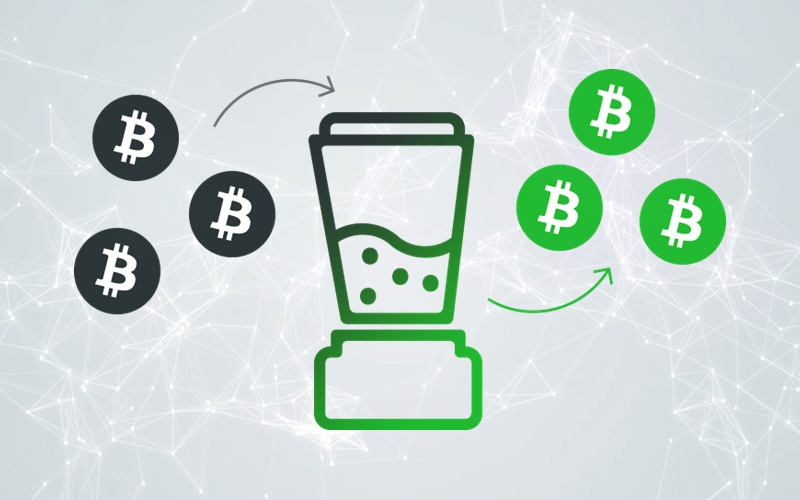

Post a Comment. Monday, June 25, What is Bitcoin Mixer script? Where can you get a good one? One of the prime feature of Cryptocurrencies was the anonymity it provided for it’s holder. Earlier, anyone could buy a cryptocurrency without being asked for their details. This has changed in the recent times and there are tools that could track the movement of these coins and trace them back to the owner.
🔥SOUL burn #15🔥
1.28 million of SOUL burnt (50% of tokens spend in the game)
Next SOUL burn on 29th October pic.twitter.com/z5DDkM67Te
— CryptoSoul (@CryptoSoul_) October 15, 2019
Using a .onion mixer
There are two concepts to note here that are critical to the new kind of digital assets that are collectively referred to as cryptocurrencies. The second is the protocol upon which the token is being exchanged.
The bitcoin protocol, in particular, uses a public ledger system where all transactions can be seen on the blockchain.
Bitcoin transactions use cryptographic calculations to complete blocks of transactions. These transactions are generated using specialized equipment called miners which try to solve the transaction blocks from difficult cryptographic equations.
Bitcoin addresses are the point from which funds can be either sent to or received from each user within the blockchain. Pseudo-anonymity can be referred to a state of having a false identity. The exchange of tokens across the bitcoin blockchain cannot really be tied to a single individual, but using other possible data-sets, it is possible to identify possible owners of specific bitcoin addresses. E-mail addresses, internet protocol addresses, usernames and passwords which may exist on certain server logs serve as examples of such data-sets which can easily tie individuals to specific bitcoin addresses.
While bitcoin addresses use a cryptographic key to access the blockchain and also to send and receive funds, it is still possible to track transactions from one address to the other since all transactions are recorded in the public ledger which is part of the blockchain. It is also possible for attackers to connect the multiple nodes within the blockchain and discover the source of a specific transaction.
Bitcoin Mixers or Tumblers or Shufflers are services which permit bitcoin users to conceal the origin of their transactions. Such services are used to allow the users to have some privacy and some further anonymity since all bitcoin transactions can be traced in the public ledger of the bitcoin blockchain. Such services essentially obfuscate the process of bitcoin transactions by having them mix with monies coming from other bitcoin addresses.
For example, if Mr. A sends X number of bitcoins to Mr. B but wants to hide the fact that he is the one sending it, he uses a tumbler which sends seemingly random amounts to different addresses which now start to reach Mr.
B in those different amounts. The number of bitcoins reaching Mr. B, therefore, will be in discrete amounts and will arrive at Mr. The link between Mr. A and Mr. B may never be fully established if no one really knows what transactions went on between Mr. All the transactions are handled within the database of the mixing website and what the mixer does, in this case, is to match different wallet addresses and different amounts and send random amounts of bitcoins to each address until the total amount requested by the sender arrives at the designated address.
While this may look like the easy way out, it poses the greatest risk to both the mixer and the user as since everything is handled centrally. Examples of centralized mixing services include MixerTumbler, BestMixer. This kind of mixing process is contrary to the purpose for which bitcoin was invented by Satoshi Nakamoto in Also, the server and transaction logs which are centrally located pose a risk factor. All though that risk itself can be minimized.
More on that shall be discussed later. In this kind of mixing transaction, different users form an exchange and use protocols to be able to mix their bitcoins effectively.
Once this kind of exchange has been formed, the process of mixing the bitcoins without the need of a middleman starts. The advantage of this model is that since there is no middle man, the transaction will indeed become pseudo-anonymous.
There are no central authorities who monitor such transactions. It is important to note that these are protocols rather than services. But the ever-elusive Monero is actually the king of the hill right now when it comes to anonymization as per cryptocurrency transactions.
The only problem these cryptocurrencies have is that they still must be exchanged at one point or the other for either bitcoin or fiat currencies. When it comes to security, Bitcoin mixers are as secure as the protocols used to access. In essence, adding deep web access and using the deep web only mixers are the highest form of security which anyone can ever wish to gain when mixing bitcoins!
However, the larger the number of bitcoins to be mixed, the lower the transaction fees. While this may be true, it what are bitcoin mixers also a known fact that the privacy of transactions also aids crimes and help to hide the proceeds of criminal activity.
Looking at it from both perspectives, while it is beneficial to have privacy when it comes to transactions, it is also disadvantageous to have obscure origins of money showing up within economies. So, while the days of Ultra-Private Swiss banks may have come and gone, the ultra-private bitcoin wallet does indeed exist, added to it bitcoin mixing services which are used to obscure transaction sources! Once the bitcoins which you want to launder are in your wallet, use the first one which will land in an intermediate wallet before using the second one which will land in the destination wallet.
That way, your tracks, even though they may not be covered, will be without a doubt hard to decipher! Layering provides extra anonymity as this allows for a total disconnect from the source wallet to the destination wallet. Clark Wayne Crypto Enthusiasts. Tweet This. What is Pseudo-anonymity? Are Bitcoin Transactions Truly Anonymous? So, yes! Centralized mixing also has its disadvantages. Decentralized or Peer-to-Peer Mixing In this kind of mixing transaction, different users form an exchange and use protocols to be able to mix their bitcoins effectively.
Zcash is a prime example of one of such services. In essence, it is usually better to just mix bitcoins effectively! This is because larger transaction volumes produce larger profits for the mixing services. Bitcoin Mixer Criticisms There are many arguments which are basically for and against the use of mixing services.
Always make sure that you access your online wallet with a peer-to-peer protocol. After this then you can use two mixers to obfuscate your transaction. Continue the discussion. Clark Wayne. Clark Wayne May Hackernoon Newsletter curates great stories by real tech professionals Get solid gold sent to your inbox.
Every week! BlockEx Sep Raiden Network Sep Alex Wang Mar Anthony Xie. Contact Us Privacy Terms.
Is it worth it?
As the name implies, it works by mixing your coins with those in our cryptocurrency reserves to ensure private transactions without a trace. The blockchain provides us with a record of the source and destination addresses for every transaction. Prior to the advent of trustless alternatives, mixing services also called tumblers were used to mix one’s funds with other people’s money, intending to confuse the trail back to the funds’ original source. Why our Bitcoin tumbler stands out from the rest What forms the pillar of CryptoMixer is that it has been designed with the needs of Bitcoin community members in mind. Peer-to-peer tumblers appeared in an attempt to fix the disadvantages of the centralized model of tumbling. We make this information known selectively, on an individual basis, when necessary. Retrieved 6 July Please check and accept important terms Incoming address is valid only for 24 hours. Amount you receive to your wallet BTC to. Be sure to use TOR and a non-traceable email address like Protonmail. We recommended using Electrum, but any client that functions over Tor will work. The what are bitcoin mixers of tumblers has made the anonymous use of darknet markets easier and the job of law enforcement harder. Our servers use advanced encryption methods to ensure the integrity of all data stored and minimize the risk of the Blockchain analysis. Once they have, restart Tor and then send the coins to your market address or their eventually destination! You can choose your mixer s and get the correct URLs from our list of darknet Bitcoin mixers.
Comments
Post a Comment