
Tiaan Wolmarans August Copy Link. Learn how and when to remove these template messages.
News feed continued
This first course of the Blockchain specialization provides a broad overview of the essential concepts of blockchain technology — by initially exploring the Bitcoin protocol followed by the Ethereum protocol — to lay the foundation necessary for developing applications and programming. You will be equipped with the knowledge needed to create nodes on your personal Ethereum blockchain, create accounts, unlock accounts, mine, transact, transfer Ethers, and check balances. You will learn about the decentralized peer-to-peer network, an immutable distributed ledger and the trust model that defines a blockchain. This course enables you to what are utxos in a bitcoin blockchain basic components of a blockchain transaction, block, block header, and the chain its operations verification, validation, and consensus model underlying algorithms, and essentials of trust hard fork and soft fork. Content includes the hashing and cryptography foundations indispensable to blockchain programming, which is the focus of two subsequent specialization courses, Smart Contracts and Decentralized Applications Dapps.
What Is A UTXO?

By using our site, you acknowledge that you have read and understand our Cookie Policy , Privacy Policy , and our Terms of Service. Let’s say, I am trying to do a double spend by creating two transactions almost immediately, is it possible that both the transactions are added in one block? If yes, then which transaction is valid and which is invalid? Also is there any specific order in which miners gather transactions in a block before starting to find proof of work? Addition to Bolton’s answer: Transactions in a block can be in any order, given that if a transaction spends another’s output, the parent transaction must come before the child tx and the coinbase transaction collecting the block reward comes first. Bitcoin and other blockchain protocols enforce the constraint that any valid chain cannot have double spend UTXOs.
The Chainstate Database
So when I first learnt about a new blockchain called Ethereum, my immediate question. Looking for answers, the thing I quickly realized was that this was not a very accurate question.
Ethereum is a Platform. Underneath the platform is a custom-built blockchain that enables new applications to be built on top of it. My favorite analogy to thinking what are utxos in a bitcoin blockchain platforms is the American Interstate Highway system or the highway system of any country, really. These highways are governed by a s et of defined rules that everyone has to follow when using. For example, getting in and out only through exits, no stopping anywhere, lane discipline and speed limits, no drunk driving.
As long as you are following these rules, you can use the highway network to go wherever you want to go, stop at any exit you want to stop. The highways connect cities and towns and people living in. They enable transportation and transaction of goods and services, power several businesses and over time unleash economic activity and commerce.
Also, the more people use these highways, the more valuable they. The Ethereum platform is a lot like a highway network, except the network in this case is made up of computers nodes connected securely via the internet.
Ethereum, just like our highway system also has a set of rules that one can use to build and power new businesses, applications, exchanges. T he American Interstate Network is managed and maintained by the government, which means the responsible authorities if they wanted to can control, limit or totally restrict access to any highway, or even multiple highways.
Worse still, authorities can restrict all highways leading to a particular city, completely cutting access to it. That, in short, is the problem with centralization of authority. It leaves the majority vulnerable to the will of the minority. In this case, it requires that to enjoy the advantages of a highway system, the majority trust the minority. Ethereum is unlike the highway system in this regard.
It is powered by a network of distributed computers that no one entity controls. Here, nobody can restrict access to a particular asset that belongs to you, and so there is no trusting any authority, but.
This system ensures that one can create apps, online businesses, contracts. If you create an asset on Ethereum, you can rest assured that you will have access to that asset securely, without any censorship or downtime. This promise of real world trustless applications is what makes the Ethereum platform so valuable. Well, it all comes down to who will build these distributed, trustless applications of the future, and the tools they will use to build this aspirational future.
You see, building a software application distributed or not, trustless or otherwise needs one to write code. But you perhaps knew. But what is not always obvious is that before writing software, serious developers choose their tools, carefully. One of the most important choices they make is what programming language to use, which is in turn driven by how developer friendly the language is. One such feature is loops. Not very efficient, is it?.
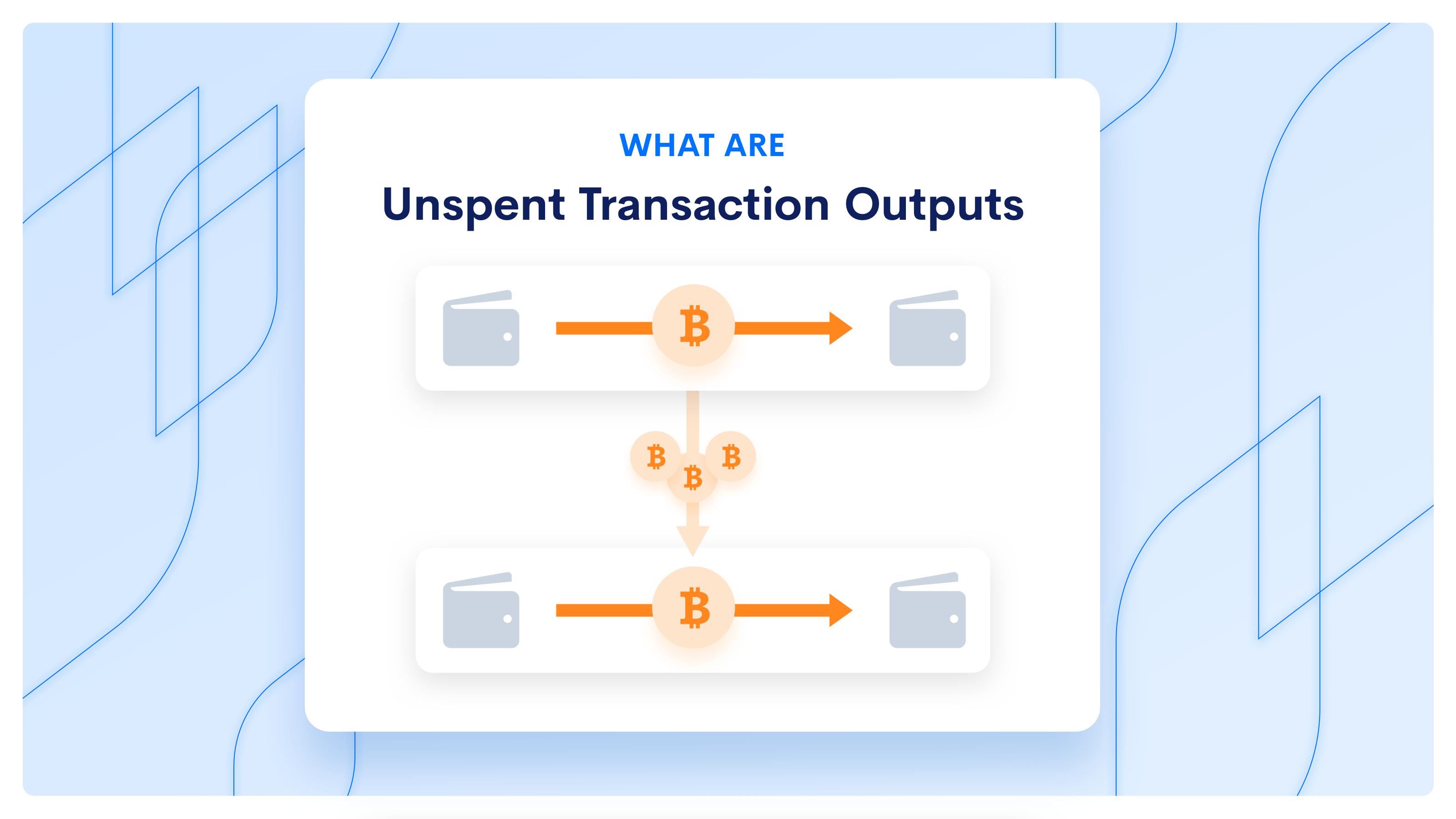
Good question. Its hard to focus on the end product, when something that can otherwise be done by writing 3 lines of code, takes 3 weeks. Consequently, Ethereum has the potential to, and actually does, attract more developers to build applications on top of the Ethereum blockchain. When somebody sends you bitcoins, these amounts are termed as outputs in Bitcoin speak. When somebody sends you outputs, the UTXOs in their wallet are reduced by the amount they transferred, and UTXOs in your wallet go up by the same.
No problem! But like I mentioned, your wallet has 3 different transaction records that add up to 11 bitcoins. In other words, the scripting language has no fine grained control over the bitcoin amounts that you can withdraw to transfer to your friend. All that complexity is left to you. To send 3 bitcoins to your friend, you will first have to create a transaction and to do the following.
Note that you have 3 transaction records that you can reference as inputs in step 1 above txn 1 or 2 or 3. Now because you HAVE to spend all 4 bitcoins but you only want to transfer 3 out of those to your friend, you will need to create another output transaction sending the remaining 1 bitcoin to. That is how UTXOs work under the hood, and by the way they are way more complicated to implement than this explanation. If there are two or more subsets of UTXOs that meet this criteria then one needs to write additional logic that will somehow decide which subset to use.
Clearly, too much complexity for a simple transaction, for most developers. Ethereum fills that gap and therefore has seen rapid adoption. By the way, and maybe you already noticed, UTXOs have another property that makes them hard to configure. Ethereum on the other hand scores much much better in terms of ease of implementation for such a smart contract.
Today, most developers that want to develop blockchains apps struggle because there are no easy platforms that lets them build things easily, and a platform like Ethereum aims to solve just that, so everyone including non-expert programmers like myself can also build things that are powered by blockchain.
That is how you build the future, and distribute it evenly. There are several development groups already working on decentralized apps ranging from value exchange, asset registry, device discovery and things you and I cannot fathom right. It will define how things are built in the future. If this is the first time you are hearing about blockchains and Ethereum, then do yourself a favor and listen to this amazing podcast by Tim Ferris and Naval Ravikant talking to the crypto great Nick Szabo.
You will thank me later. You can also r ead part-1 of my blockchain series. In part 3 of this series, I hope to share how Ethereum really works under the hood, and also share how I built a basic 2 node test Ethereum blockchain and a simple smart contract! Abhishek Chakravarty chakrvyuh.
Tweet This. Blockchain Ethereum Product Management. Continue the discussion. About delusional optimism. Abhishek Chakravarty. Building simple yet impactful products. Abhishek Chakravarty Nov Abhishek Chakravarty Oct Embracing the Unknowns.
Abhishek Chakravarty Dec Abhishek Chakravarty Sep How to get shit done when nobody reports to you. Abhishek Chakravarty Jan Hackernoon Newsletter curates great stories by real tech professionals Get solid gold sent to your inbox. Every week! Raiden Network Sep Tim Feb Contact Us Privacy Terms.

Definition
All good. Harsh Agrawal. Copy Copied. You might be wondering that you never make two transactions in your wallet when you pay. Sometimes you go to the store and want to buy a soda, however, you may not have the exact change. Imagine a UTXO as paper money or coins. Steps for moving to Wiktionary: Check that this article meets Wiktionary’s criteria for inclusion. Initially, it is set to. This article has multiple issues. March Learn how and when to remove this template message. This is called sending the change to the change address. Primecoin Verge Vertcoin Zcoin. The new transaction is referring to a spent output.
Comments
Post a Comment