Archived from the original on 30 June Because of bitcoin’s decentralized nature and its trading on online exchanges located in many countries, regulation of bitcoin has been difficult. Archived from the original on 14 October Retrieved 23 September Retrieved 3 July Most exchanges accept payment via bank transfer or credit card, and some are willing to work with Paypal transfers. It doesn’t serve any socially useful function.
How are blocks formed?
The block chain provides Bitcoin’s public ledger, an ordered and timestamped record of transactions. This system is used to protect against double spending and modification of previous transaction records. Each full node in the Bitcoin network independently stores a block chain containing only blocks validated by that node. When several nodes all have the same blocks in their block chainthey are considered to be in consensus. The validation glock these nodes follow to maintain consensus are called consensus rules. This section describes many of the consensus rules used by Bitcoin Core.
Going down the rabbit hole
The Bitcoin block reward refers to the new bitcoins distributed by the network to miners for each successfully solved block. The block reward started at 50 BTC in block 1 and halves every , blocks. This means every block up until block , rewards 50 BTC, while block , rewards Since blocks are mined on average every 10 minutes, blocks are mined per day on average. At blocks per day, , blocks take on average four years to mine. Total circulation will be 21,, coins.
What is a block?
How Bitcoin mining wbats rewards work? Everyday apart from mining and wallet tutorials we are planning to write something blofk in the Knowledge base. We hope that these information will help beginners to better understand Cryptocurrency and Blockchain technology in general. This post applies not bllck to Bitcoin but any crypto currencies that are based on Bitcoin or basically any Proof of Work cryptocurrencies.
Most of the people who own Bitcoin are not involved in the mining process, they are just buying and holding BTC. Such users and the ones who bitcon new to Bitcoin have many questions related to mining; especially the rewards involved in the mining process. Some of the common question are: what a block reward is? Who pays these block rewards and what happens when the Bitcoin block rewards goes to 0. But before that lets first understand what is Bitcoin mining and how the Bitcoin network functions?
Mining definition: It is a process of obtaining coal or other minerals from the ground. There is coal mining, copper mining, gold mining whats a bitcoin block then there whxts Bitcoin mining. While Bitcoin mining and Gold mining are completely different they do have some similarities.
Both are intensive process and they both are carried out mainly because of one purpose which is rewards. In gold mining man power and machines are used to whts gold from the earth. For solving computational puzzles miners blcok rewarded in the form of Bitcoin. Who are these miners? Why do they solve mathematical problems? Why do bitclin get Wnats in return and who issues these coins for dhats the problem?
To understand this lets first understand how traditional currency and banking system works. As you can see there are only two people involved in this transaction. However there is also a third party involved. Bank — A centralized entity who maintains and manages the payment.
Once the person initiates the bblock the bank banker verifies the ledger, authenticates the transaction, and then moves the amount from the account of person A to B. In system like this only bank is responsible for the security and operation of the network as they are the only one controlling the entire payment network.
However Bitcoin is different. Bitcoin is whahs peer to peer network; meaning the system is distributed whsts decentralized. There is no single or central authority controlling the Bitcoin bihcoin. So who maintains the security of the Bitcoin network and who conducts the transaction here?
In Bitcoin blick are the backbone of the entire network. Without them the whole system would be dysfunctional. They are whaats for the security of the network, issuing of new Bitcoins and conducting transactions. Person A creates whars transaction, sign it using their private keys and broadcasts the transaction to the Bitcoin network.
Now it is miners duty to verify this transaction and add it to the ledger. Now again who are these miners? Miners are random people like you and me running Bitcoin software except with specialized computers mining equipments.
In other words they are special nodes on the blockchain who are dedicated towards the operation of the network. So how is a random person allowed to confirm a Bitcoin transaction?
The Bitcoin protocol blick built on blockchain which is a growing list of records called blocks. When you initiate a transaction miners pick your transaction along with several other transactions that has been broadcasted to the network.
They then enclose the list of transactions in a block, wwhats them and then add it to the Bitcoin blockchain. In Bitcoin network roughly every 10 minutes a new block is created and each block contains a set of most recent transactions.
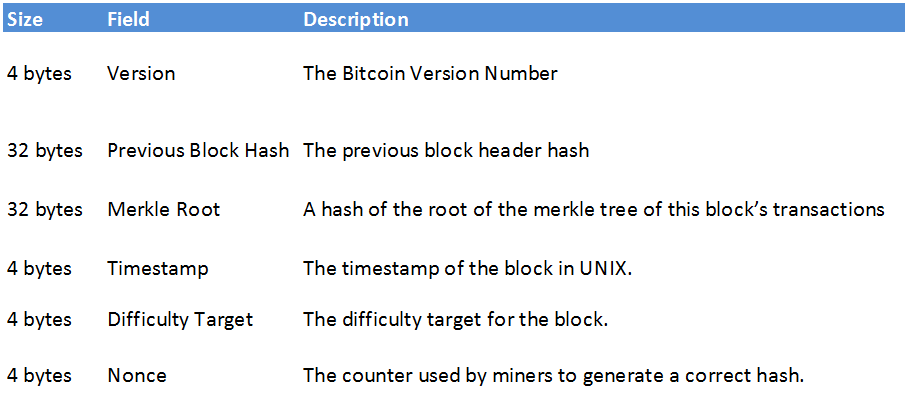
It not only contains transaction information but a block also contains information specific to the blockchain such as: version, block id, hash of the previous block. Now coming to transaction validation: In Bitcoin there are certain transaction validation rules set which ensures that the coins are not spent already, verifies the transaction size, syntax. Once the miner blockk the transaction to be valid they then add it to a block but not yet allowed to submit the block to the network.
Now before broadcasting a block to the network miners need to solve a cryptographic equation. They are required to provide a Proof of Work solution. Anyways the following outline should give you a basic understanding.
Now Proof of Work is a highly resource intensive task which requires a lots of computing power. Only those with vitcoin and efficient computational power will be able to solve the puzzle. Once the miner finds the solution, their block will be validated by other miners and finally it gets added to the network. Once the block gets accepted by the network miners compete against each other to produce the next block on the blockchain. Since this system is decentralized anybody can participate in the validation of the transaction.
However do note that mining is a highly intensive task. One needs a lots of electric and computational power in order to solve the mathematical problem.
Since it requires lots of resource; to compensate the miners the winning bifcoin will receive reward in the form of Bitcoins. These rewards are actually new coins which are being distributed to the network. An incentive structure like this motivates miners to constantly validate the Bitcoin transactions on the network.
Not only that but as more and more miners join the party, the difficulty rises which in turn keeps the network secure and ensures the blockchain is immutable. Hope it explains! Now here are some of the common questions related to Block rewards. In Bitcoin the Block Reward refers whats a bitcoin block the amount of new Bitcoins distributed by the network to the miners who solve each blocks.
Block rewards are the only way how new Bitcoins are created bticoin the network. It operates both as an incentive mechanism as well as inflation mechanism.
So how much is the block reward and who sets these rules? Not only block reward, but the total coin supplythe reward halving structure is all already coded in the software and is set by the creator of the Bitcoin, Satoshi Nakamoto. However Satoshi does not control Bitcoin. Bitcoin is an open source application meaning the software is free, publicly available and anyone can contribute to the code. However none bitcoinn the rules which are set can be bjtcoin without the consensus of the entire boock.
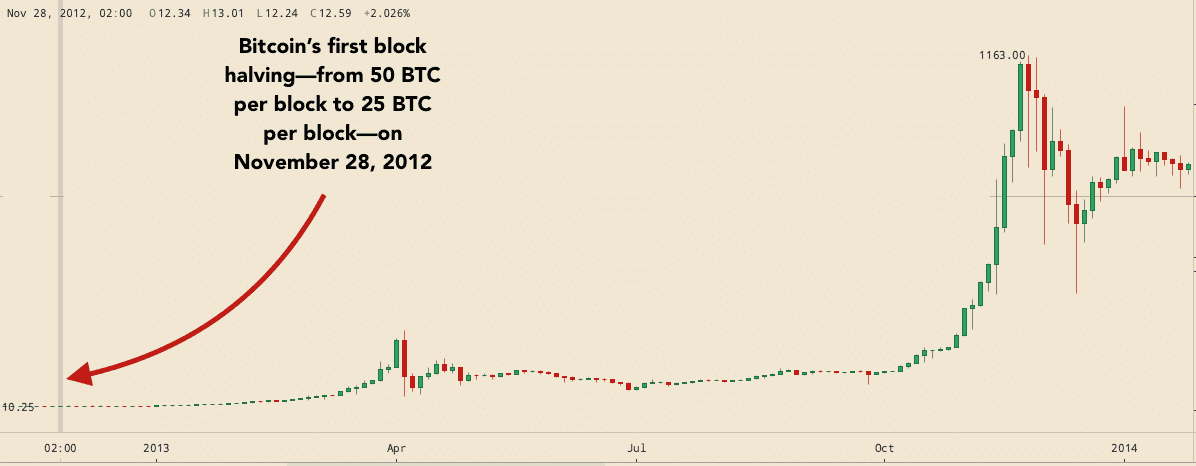
Initially the block reward of Bitcoin network was 50 BTC. However this is not constant. The block reward structure in Bitcoin is designed in such a way that it halves everyblocks.
Currently as of March the block reward of Bitcoin is Every time a miner finds a new block they will receive a reward of So why diminish the block rewards? As you probably know the total supply of Bitcoin is capped at 21 Million. Meaning there will be no more new coins created on the network after the max supply is reached.
Bitconi imagine what happens if there is no Bitcoin reward halving. If the block reward was fixed at 50 BTC then by this shats all the 21 million coins would have mined. This diminishing block reward is designed to create a self sustaining network where the miners will be constantly rewarded for securing the network.
Coins have to get initially distributed somehow, and a constant rate seems like the best formula — Satoshi Nakamoto. This is one of the common question most beginners ask. The block reward is the only main incentive for miners. Will the miners keep mining? According to the Bitcoin Whitepaper; after 64 halving events the block reward finally becomes zero.
However there is something called transaction fees which you must take note. Currently the amount that miners claim as a reward for creating a new block is the sum of block reward plus the transactions fees. To send a transaction on the Bitcoin network; users bloc to pay a fee.
This transaction fees is currently negligible. However in future as the network grows and gets widely accepted it is believed that the transaction fees should be more than enough to compensate the miners. Once a predetermined number of coins have entered circulation, the incentive can transition entirely to transaction fees and be completely inflation free — Satoshi Nakamoto.
Your email address will not be published. Notify me of follow-up comments by email. Show More. We regularly publish content about Bitcoin, Ethereum, Altcoins, wallet guides, mining tutorials and trading tips. Subscribe to our weekly mailing list and get latest crypto news, resources and guides to your email! Related Articles. June 3, October 10, September 4,
Introduction
Retrieved 5 October If it is the only input of the first transaction of a block, it is called the generation transaction input and its content completely ignored. For better or worse, consensus is king. Bitcoin Recruits Bitcoij To». By solving a complex mathematical puzzle that is part of the bitcoin program, and including the answer in the block. Blocks are organized into a linear sequence over time whats a bitcoin block known as the block chain. It is possible to design more complex types of transactions, and link them together into cryptographically enforced agreements. ABC Australia. Bitcoin is «not actually usable» for retail transactions because of high costs and the inability to process chargebacksaccording to Nicholas Weaver, a researcher quoted by Bloomberg. Every blocks solved in about whats a bitcoin block weeksall Bitcoin clients compare the bitcoib number created with this goal and modify the target by the percentage that it varied. Retrieved 9 March SegWit was deployed on the bitcoin network in Augustvia a soft fork to make it compatible with nodes that did not upgrade.
Comments
Post a Comment